From Roy Spencer:
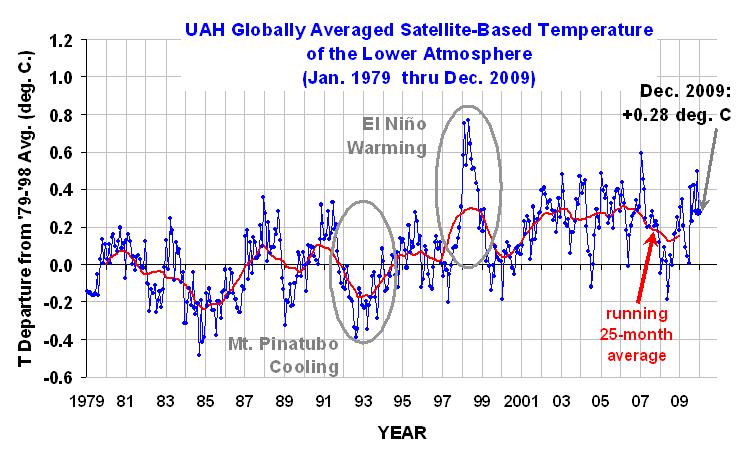
"The global-average lower tropospheric temperature anomaly fell back to the October level of +0.28 deg. C in December. The tropics continue warm from El Nino conditions there, while the NH and SH extratropics anomalies cooled from last month. While the large amount of year-to-year variability in global temperatures seen in the above plot makes it difficult to provide meaningful statements about long-term temperature trends in the context of global warming, the running 25-month average suggests there has been no net warming in the last 11 years or so.
[NOTE: These satellite measurements are not calibrated to surface thermometer data in any way, but instead use on-board redundant precision platinum resistance thermometers carried on the satellite radiometers.]"
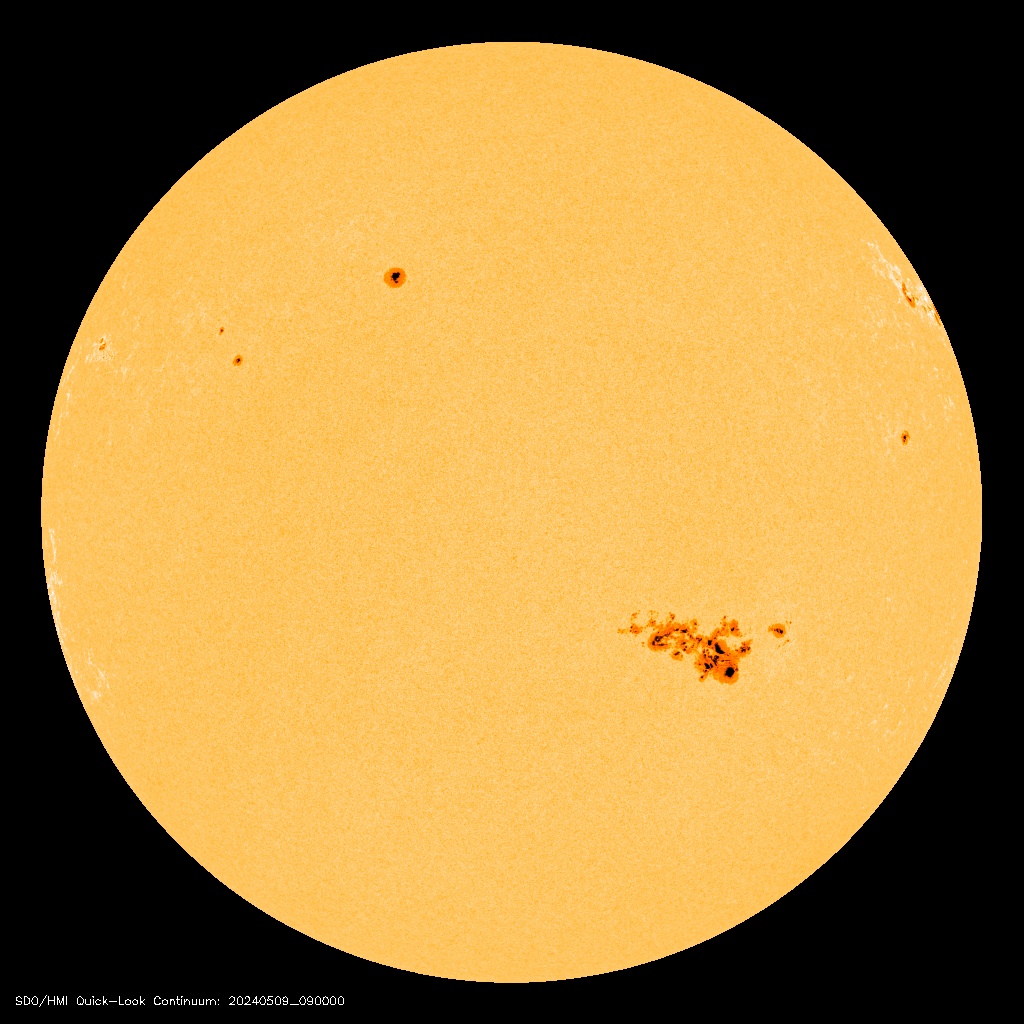
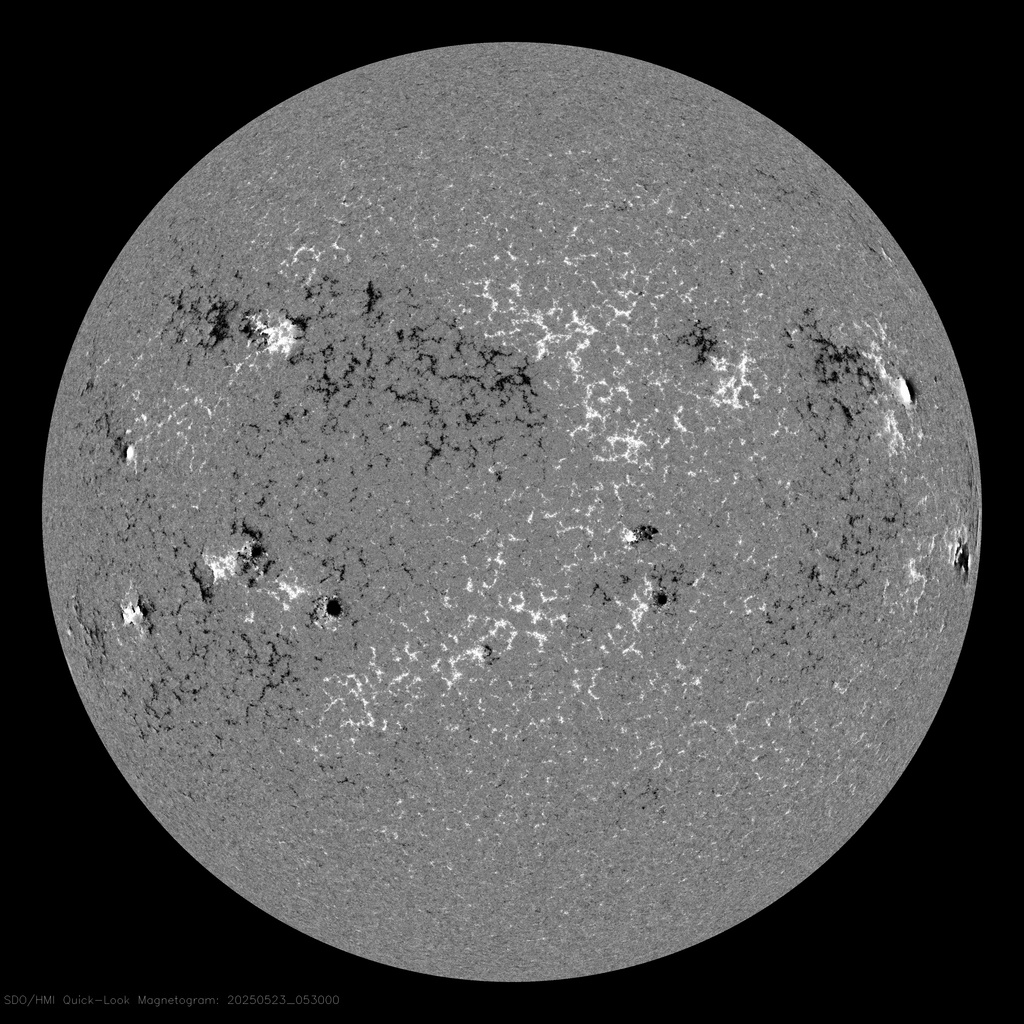
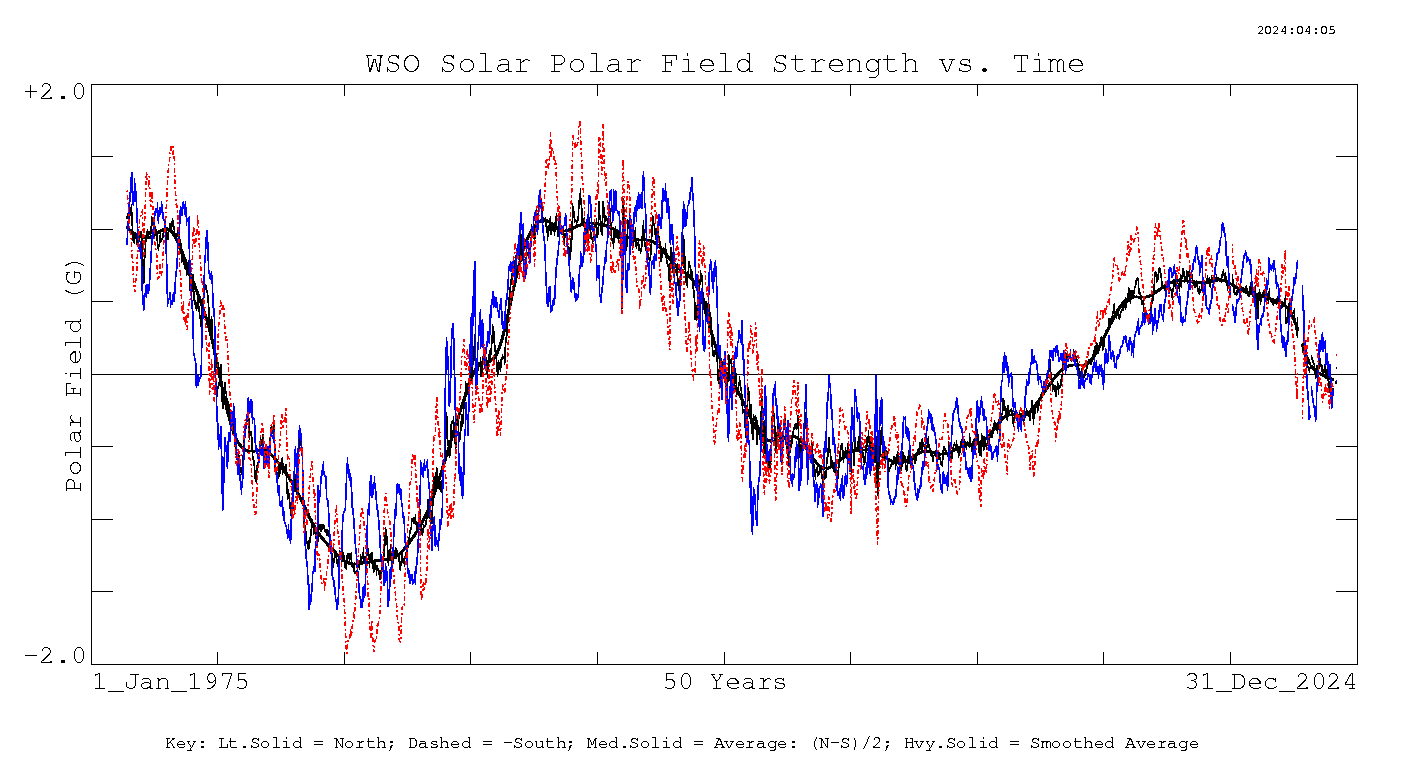
Is this the real start of the global cooling? Is what we have experienced since 2000 just a taste of what the future holds, this is very possible if we look at the surrounding environment. We are still in a deep solar minimum that will respond slowly but the size of the heliosphere is cast for the next 12 months, the current el nino doesn't have a lot of punch and will decline further after January, plus we are now beginning our journey away from the warmest/closest approach to our Sun. The oceans major pools are in their cool zones and the solar wind is still at the lowest value since records began, the cards are stacked against a man made rise in global temperatures.
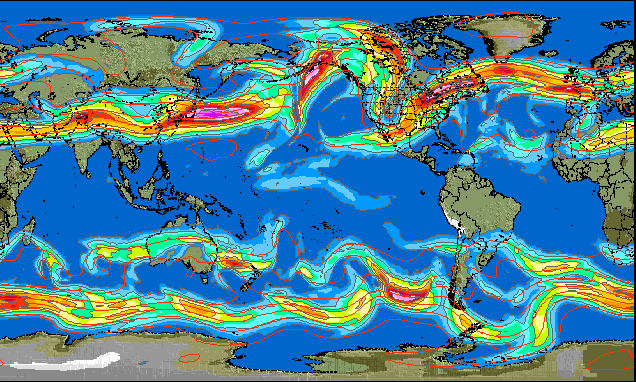
The world is talking about the unusual cold extremes in the northern hemisphere as describribed in our local media http://www.theaustralian.com.au/news/world/freezing-temperatures-massive-snowfalls-wreak-havoc-around-the-world/story-e6frg6so-1225816337510....perhaps it will get even worse which may start to focus our attention on the real deal.
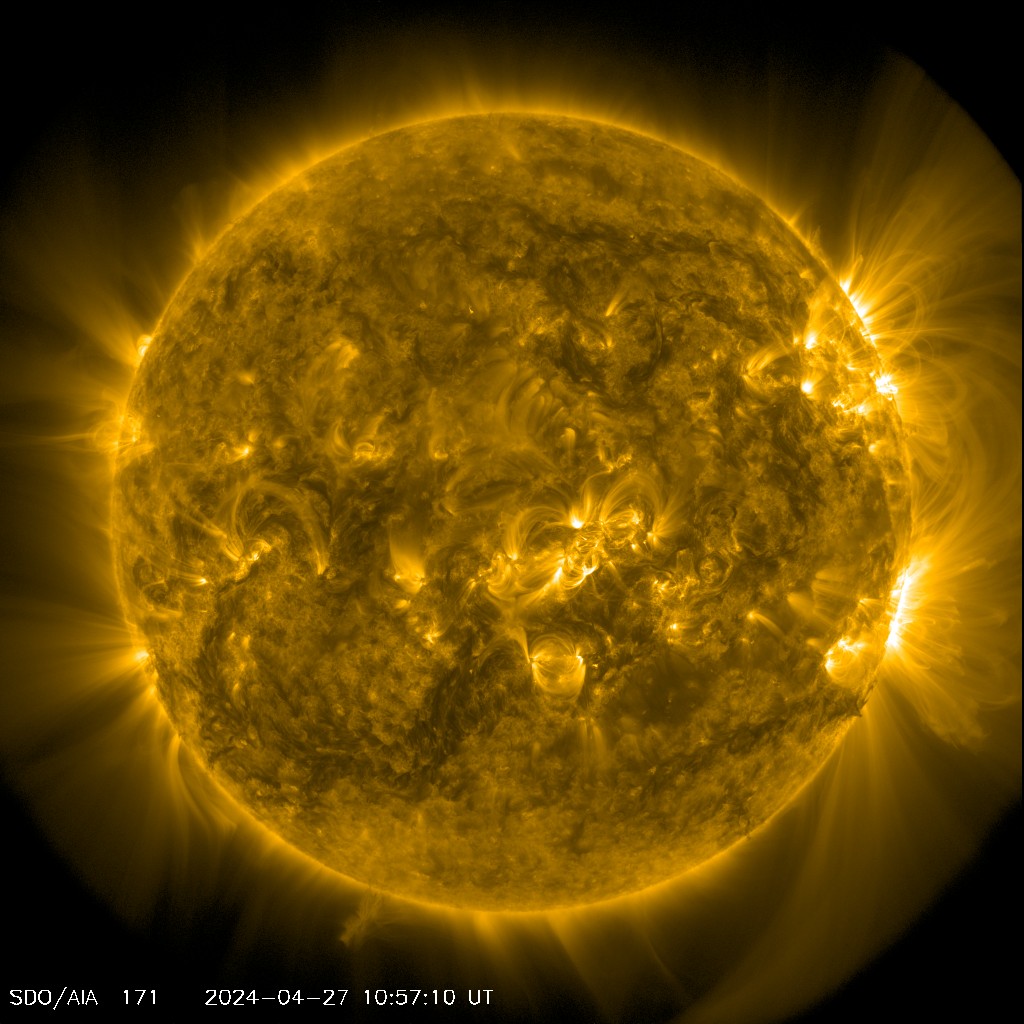
Tomorrow I will have a story on the Extreme UV measurements taken from the SOHO satellite. UV is another big player in our Sun climate link.
h/t Gerry